

CAN YOU USE LIFTING STRAPS FOR PULL UPS? YES, HERE IS HOW
When it comes to building serious back strength and grip endurance, few exercises match the power of a classic pull-up. But what happens when your grip gives out before your muscles do? That’s where lifting straps come in.
At Set Lifting, we know that success in the gym isn’t just about effort, it’s about using the right tools to get the most out of every rep. So, can you use lifting straps for pull-ups? Absolutely! and here’s how to do it safely and effectively.
What Lifting Straps Actually Do
Lifting straps are designed to reinforce your grip by connecting your hands more securely to the bar. They take pressure off your forearms and allow your back and shoulders to handle the workload. For pull-ups, this means you can:
-
Perform more reps without grip fatigue.
-
Maintain better form during long sets.
-
Focus on muscle activation rather than grip failure.
When your grip starts to slip during high-volume pull-ups or weighted variations, straps keep you locked in, allowing for stronger, cleaner sets.
How to Use Lifting Straps for Pull-Ups
Step 1: Start by threading the strap around the pull-up bar.
Step 2: Wrap the free end around the bar two to three times, depending on strap length.
Step 3: Tighten your grip so the strap locks your wrist securely to the bar.
Step 4: Perform your pull-up, keeping your wrist straight and tension consistent throughout the movement.
Pro Tip: Keep your thumb on top of the bar instead of underneath for a more even pull and less wrist strain.
When to Use (and When Not To)
Lifting straps are ideal for:
High-rep pull-up sets.
Weighted pull-ups.
Days when your grip is fatigued from deadlifts or rows.
However, avoid using them all the time — Over-reliance on straps can limit natural grip strength development. Alternate between strapped and non-strapped sessions to keep your forearms strong.
Why It Matters
Using lifting straps for pull-ups doesn’t make you weaker — it makes you smarter about your training. When you eliminate grip failure as a limiting factor, you can push your back and lats to full potential, achieving greater growth, endurance, and control.
The Set Lifting Advantage
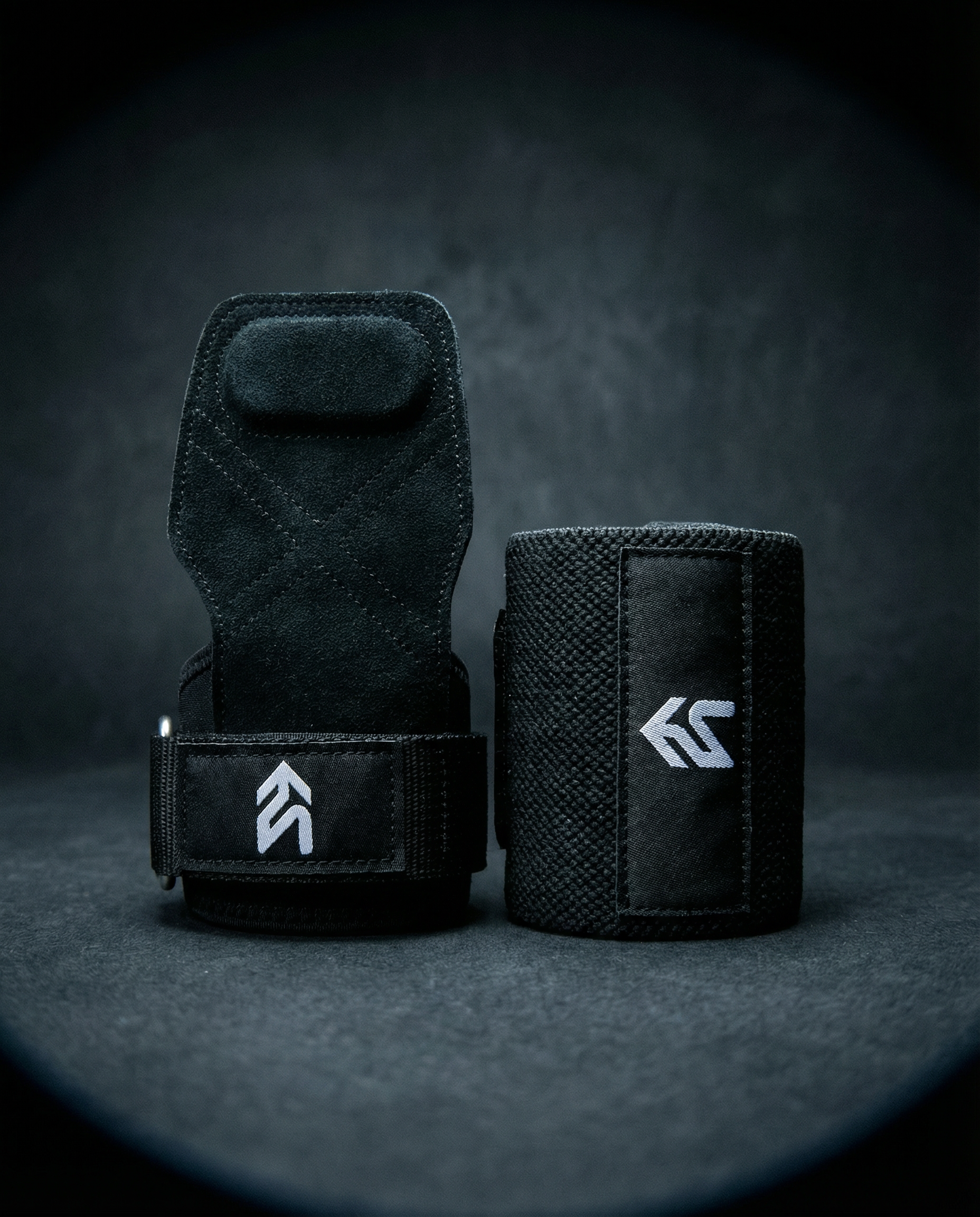
Our Set Lifting Wrist Straps are engineered for durability, comfort, and precision, featuring reinforced stitching, anti-slip material, and ergonomic padding that supports your wrists without cutting circulation.
Whether you’re pushing through a new PR or grinding out your final set, Set Lifting gives you the grip to go beyond your limits.
How Do Lifting Straps Help With Pull-Ups?
Pull-ups are one of the most effective upper-body exercises, they build strength, width, and control through your back, shoulders, and arms. But for many lifters, the biggest challenge isn’t strength, it’s grip endurance. That’s where lifting straps come in.
At Set Lifting, we build accessories that help you lift smarter, longer, and with confidence. Here’s how lifting straps can transform your pull-up game.
1. Reinforce Your Grip
Lifting straps secure your hands to the pull-up bar, reducing how much your forearms and fingers have to work to hold your body weight. This allows you to focus on pulling with your back and lats, not just hanging on with your hands. The result? More reps, better form, and deeper muscle engagement.
2. Reduce Grip Fatigue
During high-rep or weighted pull-up sets, your grip often fails before your muscles do. Straps help delay that fatigue, letting you push your back to true failure without losing control of the bar. Over time, this means more volume and better gains.
3. Improve Focus and Form
With your grip locked in, you can concentrate on muscle contraction and proper movement, instead of worrying about slipping. This is especially helpful during slow negatives or weighted pull-ups, where every ounce of focus counts.
4. Support Recovery and Consistency
If you’re coming off a wrist, elbow, or forearm injury, straps can help you continue training without putting too much stress on your grip. They support joint stability and help you stay consistent, a key factor in long-term progress.
Why It Matters
Using lifting straps doesn’t mean taking the easy way out, it means training with purpose. By eliminating grip limitations, you can target the right muscles, increase time under tension, and accelerate results safely.
The Set Lifting Difference
Our Set Lifting Wrist Straps are built for performance and longevity, crafted from high grade polyester, cotton blend and anti-slip padding that delivers both comfort and confidence.
Whether you’re chasing your first pull-up or repping out weighted sets, Set Lifting gives you the grip to go beyond your limits.
Why Lifting Straps Help With Muscle Hypertrophy
Building muscle or muscle hypertrophy, isn’t just about lifting heavier weights; it’s about pushing your muscles to complete, controlled fatigue. One of the biggest barriers to that? Grip failure.
At Set Lifting, we know that your progress shouldn’t stop just because your hands give out before your muscles do. That’s where lifting straps become a game changer for strength and muscle growth.
1. Eliminate Grip as a Limiting Factor
During heavy pulling exercises like deadlifts, rows, or pull-ups, your grip can fatigue long before your target muscles, such as your lats, traps, and biceps are fully activated.
Lifting straps remove that limitation by securing your hands to the bar, allowing you to train your muscles harder and longer without worrying about your grip slipping.
More time under tension = more stimulus for growth.
2. Increase Training Volume
Muscle hypertrophy thrives on volume, the total amount of work your muscles do. When your grip isn’t holding you back, you can perform more reps, heavier sets, and maintain proper form throughout your workout.
This consistent overload helps break down muscle fibers more efficiently, leading to stronger recovery and visible gains.
3. Maintain Focus and Form
When your hands start to slip, your form often breaks down. Lifting straps keep your grip locked in, letting you stay fully focused on muscle engagement and technique.
That precision ensures your target muscles, not your grip are doing the work, maximizing the quality of each rep.
4. Support Progressive Overload
The foundation of hypertrophy is progressive overload ,gradually increasing the stress placed on your muscles. Lifting straps allow you to handle heavier weights safely, ensuring you can challenge your muscles beyond previous limits while maintaining control and reducing injury risk.
The Result: Stronger Muscles, Faster Growth
By taking grip strength out of the equation, lifting straps let you train your back, biceps, and posterior chain with higher intensity and better endurance. Over time, that equals greater muscle activation, improved recovery, and visible hypertrophy results.
Why Lifting Straps Help With Increased Range of Motion
Every great lift starts with control and ends with full extension. Yet many lifters stop short of achieving a complete range of motion (ROM) because of grip fatigue or loss of stability. That’s where lifting straps make a major difference.
At Set Lifting, we design gear that helps athletes move better, lift heavier, and reach their true potential. Here’s how lifting straps can enhance your range of motion and overall performance in the gym.
1. Secure Grip = Full Extension
When your grip starts to weaken mid-set, your natural tendency is to shorten the movement to keep control of the weight. Lifting straps prevent that by securing your hands tightly to the bar, allowing you to perform each rep with complete control and full range from stretch to contraction.
This means better muscle activation, more time under tension, and more effective lifts across exercises like deadlifts, rows, and pull-ups.
2. Reduce Tension on the Forearms
Forearm fatigue can limit how far you pull or lift. By shifting the tension away from your grip, straps allow your target muscles , back, shoulders, and arms to move freely through their entire motion. The result is a smoother, deeper, and more controlled movement, especially in compound lifts.
3. Promote Better Form and Control
Maintaining a consistent range of motion requires focus and stability. Lifting straps improve both by locking your wrists and hands in place, keeping the bar steady and aligned. This helps eliminate jerky or incomplete reps and supports proper technique through each phase of the lift.
4. Unlock More Muscle Engagement
A greater range of motion means your muscles are working through full stretch and contraction, which leads to stronger activation and growth. With straps, you can lower the weight under control and pull through the complete movement , maximizing every inch of your effort.
How To Use Lifting Straps For Pull-Ups
Pull-ups are one of the best exercises for building a powerful upper body, targeting your lats, traps, shoulders, and arms. But many lifters struggle to reach their full potential because of one simple issue: grip fatigue.
That’s where lifting straps come in. At Set Lifting, we design premium accessories that help you push past limits, train safely, and perform every rep with precision. Here’s how to use lifting straps the right way to take your pull-ups to the next level:
Step 1: Wrap the Strap Around the Bar
Start by placing your wrist through the loop of the strap so it sits comfortably above your wrist joint. Then, wrap the loose end of the strap around the pull-up bar two to three times. Keep it tight but not uncomfortable , you want a firm hold that won’t slip mid-set.
Step 2: Lock Your Grip
Once wrapped, grab the bar over the strap and twist your hand slightly toward you to tighten the strap into position. This locks your grip, securing your wrist and hand to the bar. You should feel the bar and strap move as one solid unit.
💡 Pro Tip: Keep your thumb on top of the bar (instead of under) for a more natural and secure pull.
Step 3: Focus on Form and Control
With your grip now supported, engage your core and pull your body upward until your chin passes the bar. Lower yourself slowly to maintain control and tension. The straps will help eliminate grip distractions so you can focus on lat engagement and full range of motion.
Step 4: Know When to Use Them
Use straps when your grip is fatigued or when training weighted or high-rep pull-ups. They’re especially useful on back or pull days when your hands are already taxed from other heavy lifts.
Avoid using them every session, going strap-free sometimes helps maintain natural grip strength. Think of straps as your performance tool, not a crutch.
Why Lifting Straps Work for Pull-Ups
By reinforcing your grip, straps help you perform more reps with better form, target your back muscles more effectively, and reduce the chance of slipping or cutting sets short. They’re a simple accessory that delivers serious results.
Who Should Use Lifting Straps For Pull-Ups
Pull-ups are one of the most effective exercises for developing a strong, wide back — but they’re also one of the toughest. Whether you’re training for strength, size, or endurance, lifting straps can be the difference between cutting your set short and reaching your full potential.
At Set Lifting, we design accessories that give lifters every advantage to perform better and recover stronger. So, who exactly should use lifting straps for pull-ups? Let’s break it down.
1. Lifters Who Struggle With Grip Fatigue
If your grip gives out before your muscles do, lifting straps are a must. They help you maintain a secure hold on the bar, allowing your back, lats, and arms to work to full fatigue without losing control.
By removing grip failure as a limiting factor, you can perform more reps, heavier sets, and cleaner form, the foundation for real progress.
2. Athletes Focused on Muscle Hypertrophy
For athletes chasing muscle growth, consistency and volume matter most. Lifting straps allow you to extend your sets, increase time under tension, and isolate your back muscles more effectively. This creates stronger activation in the lats, traps, and rear delts — all critical for hypertrophy.
3. Anyone Performing Weighted Pull-Ups
Once you start adding plates or a dip belt to your pull-ups, your grip becomes a major weak point. Lifting straps provide the extra stability and security you need to perform heavy pull-ups safely and efficiently, without the distraction of your hands slipping.
4. Lifters Recovering From Wrist or Forearm Fatigue
If you’re coming back from a wrist or forearm injury, or simply feel overworked from other pulling movements like deadlifts or rows, straps can help reduce unnecessary strain while still allowing you to train effectively. They let you stay consistent without sacrificing safety.
5. Serious Lifters Who Value Performance and Control
If you’re the kind of lifter who treats every rep as progress — every workout as an opportunity — then lifting straps are for you. They’re not about shortcuts; they’re about training smarter, protecting your joints, and pushing your muscles beyond limits.
Who Should NOT Use Lifting Straps For Pull-ups
Lifting straps are one of the most effective tools for improving grip, control, and endurance during pull-ups. They help athletes push past limitations and get more out of their workouts.
But just like every tool in the gym, lifting straps aren’t for everyone or for every situation. At Set Lifting, we believe in training smart, not just hard. Knowing when not to use straps is just as important as knowing when to rely on them.
1. Beginners Still Learning Proper Form
If you’re new to pull-ups, focus first on developing natural grip strength and control. Using straps too early can prevent your forearms, hands, and stabilizing muscles from developing properly.
Before adding straps, make sure you can perform pull-ups with good form — full range of motion, controlled lowering, and stable shoulders. Build a solid foundation first; then, straps can help take your training to the next level.
2. Lifters Training for Grip Strength or Functional Fitness
If your goal is to improve raw grip strength, calisthenic performance, or functional fitness, you should skip the straps. These training styles depend heavily on natural grip endurance and hand control.
Straps reduce grip demand, which can limit progress for athletes who rely on hand strength — such as rock climbers, gymnasts, or CrossFit competitors.
3. Light or Technique-Focused Training Days
On days when you’re working on form, speed, or control, lifting straps can interfere with the natural feel of the bar. Since you’re not training to failure or lifting heavy, it’s better to go strap-free and let your hands adapt to the movement naturally.
These sessions are perfect opportunities to reinforce grip endurance and mind-muscle connection — no support needed.
4. When Your Grip Is the Weak Link
It might sound counterintuitive, but if your grip is significantly weaker than the rest of your upper body, relying on straps too soon can create an imbalance. You’ll want to dedicate time to strengthening your grip naturally before introducing straps for advanced sets or volume work.
Try alternating strap-free and strapped pull-ups to build both power and endurance in your hands.
The Smart Way to Use Lifting Straps
Lifting straps are meant to enhance performance, not replace fundamentals. Use them as a strategic tool — on heavy, high-volume, or fatigue-based sets — and train without them during lighter or skill-focused workouts.
By using them with intention, you’ll maximize their benefits while continuing to strengthen your natural grip and technique.